

You own a handful of rentals, or you manage a few hundred doors for other people, and the spreadsheet has finally lost. Rent arrives through three different channels, a plumber's invoice lands on the wrong building, and nobody can say whether Maple Street actually makes money. Sound familiar?
This guide covers the best accounting software for real estate business owners in 2026, from simple landlord setups to full multi entity platforms. We'll compare QuickBooks, Xero, Zoho Books, Sage, Odoo and NetSuite, explain how to handle deposits and rental tax reporting, and show how to choose by portfolio size. If you'd rather have specialists run the books, Cred Books works inside all six platforms, and our outsource real estate accounting services page explains how.
Why Does Real Estate Accounting Need Specialised Software?
Real estate accounting differs from ordinary bookkeeping because of trust fund segregation, property and unit level reporting, and lease driven income. Tenant security deposits are liabilities that must stay apart from operating money. Without software that tracks each property separately, owners cannot see true returns or stay compliant.
A normal trading business doesn't care which shelf a sale came from. You care very much which building it came from. Rent, repairs, mortgage interest, insurance and depreciation all need a property tag, and often a unit tag, or your profit and loss report turns into one blurry total.
Good real estate bookkeeping handles three jobs that general software ignores by default:
- Mapping rental income and deductible expenses, such as repairs, mortgage interest and depreciation, to the lines of IRS Schedule E.
- Keeping tenant security deposits in a separate account so they never mix with operating cash.
- Splitting shared building costs across tenants, which matters most for common area maintenance on commercial leases.
Get these right and tax time is a short chore. Get them wrong and you'll spend April rebuilding twelve months of rent from bank statements. This is also the first place where our team steps in, because a clean setup at the start saves months of repair later.
Best Accounting Software for Real Estate Business: Top Platforms Compared
The best accounting software for real estate depends on portfolio size and structure. Small landlords do well with QuickBooks Online, Xero or Zoho Books set up with property tracking. Owners with several entities can use Sage Intacct, while larger groups and developers that need consolidation and operations in one system should look at Odoo or NetSuite.
This table compares the platforms that Cred Books supports every day. Pricing models are shown instead of figures, because plans, user counts and modules change often. Check each vendor for the current rates.
| Platform | Best Suited For | Key Real Estate Feature | Pricing Model |
|---|---|---|---|
| QuickBooks Online | Investors who want deep ledger reporting and CPA familiarity | Class and location tracking per property | Tiered monthly plans with user caps |
| Xero | Investor teams and overseas portfolios | Tracking categories and unlimited users | Monthly plans with no per user fee |
| Zoho Books | Small landlords who also want a connected business suite | Reporting tags, projects and multi currency support | Monthly plans, with higher tiers adding features |
| Sage Intacct | Property companies with several entities | Dimensions for property, entity and department, plus consolidation | Quote based subscription |
| Odoo | Owners who want accounting tied to daily operations | Analytic accounts inside a modular ERP | Monthly fee per user, all apps included |
| NetSuite | Large groups, funds and developers | Multi entity consolidation and project tracking | Quote based subscription by modules and users |
One honest caveat. No tool on this list is magic. The best rental property accounting software still depends on someone coding every transaction to the right property, and that discipline matters more than the brand name. Many owners also run a separate property management software tool for rent collection and tenant portals, and that tool feeds summary journals into any of the platforms above.
QuickBooks vs Xero for Rental Property Accounting
QuickBooks Online suits investors who want class and location tracking to see profit per property, plus wide CPA familiarity. Xero suits teams and overseas portfolios because every plan includes unlimited users, and it tracks properties through tracking categories. Both work as a landlord accounting software base, but neither collects rent.
Using QuickBooks for real estate usually means one class per property and one location per unit or building. The Plus plan includes both, which is why most landlords land there. You get property level profit and loss reports, and your CPA probably knows the file format already. If you're new to it, read how does QuickBooks Online work for the basics, or look at our QuickBooks accounting services if you want a team to run it for you.
Xero takes a different route. Its tracking categories let you tag every transaction by property and by unit type, and unlimited users means your property manager, bookkeeper and co owner all log in at no extra charge. Investors with properties abroad also like its multi currency handling. Our explainer on how does Xero accounting work covers how bank feeds and reports work, and our outsource Xero accounting services team sets up the property tags from day one.
Where do both fall short? Neither runs a rent roll, sends lease renewals or collects rent online. For that, you add a property tool and let it post summary journals into the ledger.
Where Do Zoho Books, Sage, Odoo and NetSuite Fit?
Zoho Books suits landlords who want reporting tags and a connected suite of business apps. Sage Intacct suits property companies that need dimensions and multi entity reporting. Odoo and NetSuite suit larger groups that want accounting, projects and operations in one database, but both need a careful setup and a clear chart of accounts.
Zoho Books sits close to QuickBooks and Xero in daily use. You tag transactions with reporting tags, track repair work through projects and handle foreign currency without an add on. It works well for owners who already use other Zoho apps for contacts or documents.
Sage Intacct goes further on structure. Instead of classes, it uses dimensions, so a single expense can carry a property, an entity, a department and a project at the same time. That is useful when an owner has several LLCs and a lender wants a separate statement for each one.
Odoo and NetSuite sit at the larger end. Both keep accounting, purchasing, projects and operations in one database, and both handle consolidation across entities. The trade is a longer implementation. Plenty of owners find these platforms heavy until the portfolio reaches the point where spreadsheets between entities start breaking.
General Ledger Tools vs Property Management Software
General ledger platforms give flexible reporting, bank reconciliation and CPA ready tax files across several entities. Property management software handles tenant screening, leases, online rent collection and work orders, with accounting built in but usually less flexible. Many owners run both and let a ledger hold the consolidated financials.
Think of it as depth against convenience. A ledger gives you full control over the chart of accounts, entity structure and reporting. A property platform saves hours of tenant admin but can feel rigid when you want to restructure accounts or consolidate several LLCs.
Entity structure matters here too. Many investors hold each property in its own LLC, and lenders sometimes want separate statements for each one. In both QuickBooks Online and Xero, every legal entity needs its own subscription or organisation. Plan for that before you pick a plan, and keep one chart of accounts template so the books look the same across entities.
Many mid sized owners end up running a property platform and a ledger side by side. The property platform runs leases, rent and maintenance. The ledger holds the consolidated financials, loans and owner distributions. The Cred Books team often builds the journal import between the two, so rent collected in the property tool lands in the right ledger accounts every month.
If you run client money, check your state rules. Property managers holding owner funds generally need trust accounting software that separates owner balances and produces trust reconciliations. Ask any vendor to show you that report before you sign.
How Do You Track Rental Income, Deposits and Schedule E?
Record rent as income on the date it is due or received, hold security deposits as a liability until applied or returned, and capitalise improvements instead of expensing them. Map every income and expense account to a Schedule E line so Schedule E rental income can be reported straight from the ledger at year end.
Deposits trip up more landlords than anything else. A deposit is not income. It is money you owe back, so it sits in a liability account and, in many states, in a separate bank account. Move it to income only when you apply it to unpaid rent or damage.
Repairs and improvements also get mixed up. A repaired window is an expense this year. A new roof is a capital improvement depreciated over 27.5 years for residential property, or 39 years for commercial. Coding these correctly changes your tax bill, so decide the policy once and write it down.
Finally, set up your chart of accounts to mirror Schedule E from day one. When advertising, cleaning, insurance, legal fees and management fees each have their own account, your CPA can lift the totals without a single phone call.
How Do You Choose Software Based on Portfolio Size?
Landlords with one to ten units can run on QuickBooks Online, Xero or Zoho Books with property tags. Owners with ten to fifty units or several LLCs should keep a disciplined class or tracking setup, or move to Sage Intacct. Large groups and developers usually move to Odoo or NetSuite for consolidation and operational control.
Use this rough guide when you're stuck between two options:
- One to ten units: QuickBooks Online, Xero or Zoho Books is enough, as long as every transaction carries a property tag and the reports match Schedule E.
- Ten to fifty units: a ledger with strict property and unit tracking, plus a property tool for rent collection if tenant admin is eating your week.
- Fifty units and above, or several entities: Sage Intacct, Odoo or NetSuite, so consolidation, intercompany entries and lender reporting stop depending on spreadsheets.
Do not buy for the portfolio you hope to own in five years. Buy for the one you manage today, and plan a clean migration path. Moving history later is easier when the chart of accounts is tidy. Not sure where you sit on this scale? The Cred Books team usually maps a portfolio to the right platform in the first review call.
What Mistakes Do Landlords Make With Real Estate Bookkeeping?
The most common real estate bookkeeping mistakes are mixing personal and rental money, coding deposits as income, skipping property tags, and leaving bank accounts unreconciled for months. Each one distorts property level returns and can trigger tax corrections or trust account problems for managers handling owner funds.
Mixing personal and rental money is the classic. One card used for groceries and a roof repair makes every report unreliable. Open dedicated accounts per entity and reconcile each one monthly. When volume grows, professional outsource account reconciliation services keeps every property account matched, so surprises surface within days.
The second mistake is skipping property tags during busy weeks. Fixing 300 untagged transactions in March is miserable. A weekly ten minute review beats a yearly rescue every time. When Cred Books takes over a messy portfolio, the first month usually goes to retagging old transactions and clearing unreconciled items, so the reports can be trusted from then on.
What Reports Do Owners, Lenders and Partners Expect?
Owners and lenders expect a property level profit and loss, a balance sheet, a rent roll, an aged receivables report and a cash flow statement every month. Lenders also ask about occupancy trends and debt service coverage. Clean property tagging and monthly reconciliations make these reports quick to produce and easy to defend.
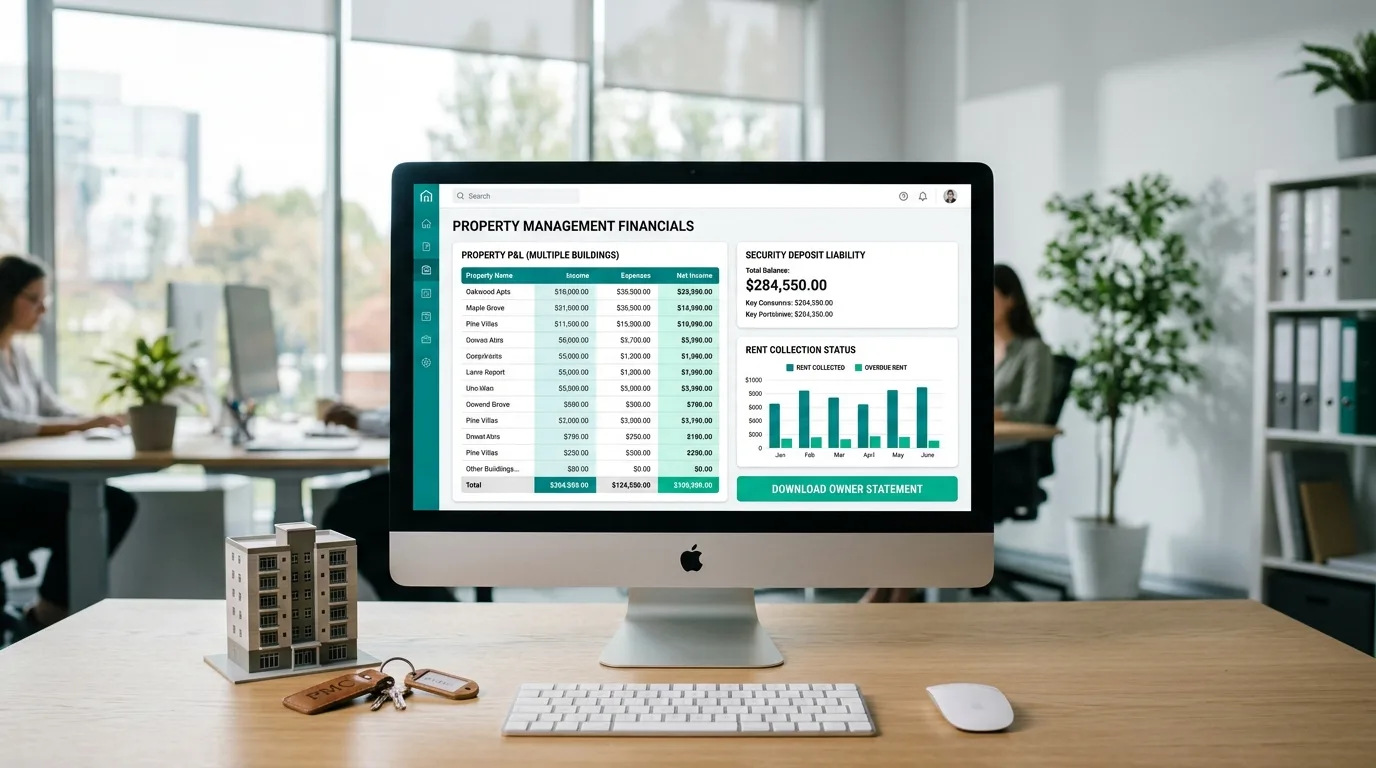
Owner statements are a different animal. They show rent collected, fees charged, repairs paid and the net amount sent to the owner. Every figure must tie back to the bank. If the statement says the owner received a certain transfer, the bank account has to show the same transfer on the same date.
Lenders care about net operating income and whether it covers the loan payments. They will compare your trailing twelve months against the rent roll, and a mismatch between the two raises awkward questions. Reports that reconcile cleanly every month are the simplest way to avoid those conversations. Our team builds these owner and lender packs through our outsource financial reporting services practice, so the numbers arrive in a format the reader already expects.
How Cred Books Delivers Real Estate Financial Reporting
Cred Books provides real estate businesses with dedicated offshore accountants who handle rent reconciliations, vendor bills, property level profit and loss reports and year end preparation. Work happens inside your existing QuickBooks, Xero, Zoho Books, Sage, Odoo or NetSuite file, so you keep your software and gain a reliable monthly reporting rhythm.
Software is only as good as the transaction coding behind it. At Cred Books, every real estate client gets a dedicated accountant who learns the properties, the entities and the reporting calendar. That person stays on your file, so you never explain the same loan or lease twice.
Here is what the monthly routine usually covers:
- Reconciling tenant payments and bank accounts for every property and entity, including the separate deposit account.
- Processing vendor bills and coding repairs, improvements and management fees to the right property and Schedule E line.
- Preparing a monthly balance sheet, a property level profit and loss and a rent versus overdue summary.
- Building owner statements and lender packs that tie back to the bank on the same dates.
- Preparing year end schedules, depreciation entries and a clean file for your CPA.
The work happens inside the platform you already use. If your books sit in QuickBooks, Xero or Zoho Books, we log in and work there. If you run Sage Intacct, Odoo or NetSuite across several entities, our accountants handle the entity level closes and the intercompany entries that tend to pile up. You keep full access to the file at all times.
The first month is a cleanup. We review the chart of accounts, retag old transactions, match every account to its statement and agree a reporting calendar with you. From the second month, you receive a steady set of reports on a fixed date, and questions get answered by the same person each time. Curious how the handover works step by step? Our guide on how to outsource accounting services walks through the first month in detail.
Conclusion
The best accounting software for real estate business owners depends on how many doors you manage and how much structure you need. Small landlords can start simple with QuickBooks, Xero or Zoho Books. Growing owners can move to Sage Intacct, and large groups can use Odoo or NetSuite. Whatever you choose, accurate coding is what produces reliable property reports. Want clearer numbers for your portfolio? Request a free consultation with Cred Books and we'll review your setup.
Frequently Asked Questions
Clear answers to the questions landlords and property managers ask most about real estate accounting software.
Q1 What is the best accounting software for a real estate business?
It depends on portfolio size and structure. Small landlords do well with QuickBooks Online, Xero or Zoho Books configured with property tracking. Owners with several entities can use Sage Intacct for dimensions and consolidation. Large groups and developers often move to Odoo or NetSuite. Cred Books accountants work inside all of these platforms.
Q2 Is QuickBooks good for rental property accounting?
Yes, for owners who want strong reporting. The Plus plan supports classes and locations, so you can run a profit and loss report for each property or unit. QuickBooks does not collect rent or manage leases, so many landlords add a property tool that feeds summary journals into the ledger.
Q3 How do I account for tenant security deposits?
Treat a security deposit as a liability, not income. Record it in a liability account when received, keep the cash in a separate bank account where your state requires it, and move it to income only when you apply it to unpaid rent or damage. Return the balance with the required itemised statement.
Q4 Do I need both property management software and accounting software?
Not always. Small landlords can run on one ledger tool. Once you manage around 20 units or more, a property platform saves time on rent collection, maintenance and tenant communication. Many owners keep a ledger for consolidated reporting, loans and tax files, and let the platform handle day to day operations.
Q5 Which expenses go on Schedule E for rental property?
Common Schedule E lines include advertising, insurance, cleaning, repairs, management fees, mortgage interest, taxes and depreciation. Repairs are expensed in the year. Improvements such as a new roof are capitalised and depreciated, over 27.5 years for residential rental property. Set up matching accounts so year end reporting takes minutes.